

Speakers

Prof. Qiuhong Zhao, Beihang University, China
Biography:Professor Zhao Qiuhong is a tenured Professor at the School of Economics and Management, Beihang University, Beijing, China. She holds a Ph.D. in Management Science and Engineering from Beihang University and conducted postdoctoral research at the University of Montreal. Her primary research interests include logistics and supply chain management, emergency management, and metaheuristics algorithms, etc. Professor Zhao has led a wide range of research projects, including key, general, and youth projects funded by the National Natural Science Foundation of China, as well as numerous applied research projects commissioned by enterprises and public institutions. To date, she has published over 200 articles in academic journals and conference proceedings, such as European Journal of Operational Research, Omega, Computers & Operations Research, International Journal of Production Research, etc. In addition to her research, Professor Zhao serves as Director of the Emergency Management Systems Engineering Committee of the Systems Engineering Society of China and as a Standing Council Member of the China Logistics Society. She also holds several editorial positions, including Associate Editor of Sustainable Operations and Computers, Area Editor of Computers and Industrial Engineering, and editorial board member of the Journal of Beijing University of aeronautics and astronautics and Systems Engineering — Theory & Practice.
Speech Title: From Resource Allocation to Response Authorization: A Two Layer Framework for Air Ground Cooperative Urban Fire Resilience
Abstract: Urban fire resilience depends on a coherent decision chain that spans long-term infrastructure planning and real-time emergency response. This study proposes a two-layer framework that explicitly links these two levels. The first layer addresses a strategic question, namely where to locate firefighting resources. It optimizes the spatial configuration of ground fire stations and unmanned aerial vehicle bases, minimizing average response time and total cost while enforcing coverage constraints for population and critical facilities. A dynamic loss function captures how fire damage accumulates over time. UAVs arrive first for reconnaissance and initial suppression, followed by ground forces for complete extinguishment. Numerical experiments based on a real-world case study in Taiyuan show that this air-ground cooperative network reduces expected life and property losses by seventeen percent compared to ground-only configurations under the same budget. The output of this layer is a fixed spatial layout of stations and bases. Given this layout, the second layer answers a subsequent tactical question, specifically which unit should respond to which building when an alarm sounds. It designs a coverage policy that pre-commits unit–building authorizations conditioned on observed alarm-time covariates such as wind direction and traffic intensity. A decision tree partitions the covariate space into distinct operational regimes, and a robust satisficing criterion minimizes the fragility index against worst-case distributional drift. The model preserves the physical indivisibility of firefighting companies through exact mixed-integer recourse. Experiments on synthetic districts and a Lower Manhattan case study demonstrate that this robust dispatch policy reduces authorized unit–building pairs by over seventy percent in each leaf while matching the unrestricted nominal benchmark on tail performance. Together, the two layers form a complete decision pipeline. The first layer determines where resources are placed, and the second layer determines how those resources are authorized to act under uncertainty. This integration bridges strategic network design and tactical response execution, offering cities a practical pathway from system planning to field-executable protocols for enhanced fire resilience.

Prof. Feng Guo, Central South University, China
Biography:Prof. Feng Guo is a Professor and doctoral supervisor at the School of Civil Engineering, Central South University, China. He holds a Ph.D. in Management and was a visiting scholar at San José State University, USA; he also studied in Japan through the Association for Overseas Technical Cooperation and Sustainable Partnerships (AOTS), and has undertaken academic exchanges in Germany and Taiwan, China. He previously served as Director of the Infrastructure Department of Central South University and Vice Dean of the School of Civil Engineering. His research focuses on engineering management, enterprise management, and education management. He has led or participated in more than 30 national, provincial, ministerial, consulting, and teaching-reform projects, including projects supported by the National Natural Science Foundation of China, the National Key Research and Development Program of China, major projects of the Chinese Academy of Engineering, etc. Prof. Guo has supervised more than 120 doctoral and master's students and published over 100 academic papers, including SCI-indexed articles in leading journals such as Journal of Construction Engineering and Management, Safety Science, International Journal of Project Management, etc., and serves as a reviewer for leading journals such as Journal of Construction Engineering and Management, Journal of Management in Engineering, etc. His major academic and professional affiliations include Chairman of the Hunan Engineering Management Society, Expert for Degree and Postgraduate Education of the Ministry of Education, Member of the Intelligent Construction Professional Committee of the Architectural Society of China, Industry Development Consultant Expert of the Department of Housing and Urban-Rural Development of Hunan Province, and Expert of the Railway Supervision Expert Committee of the China Railway Engineering Construction Association.
Speech Title: Research on New Quality Management Capability in the Construction Industry
Abstract: To be updated......
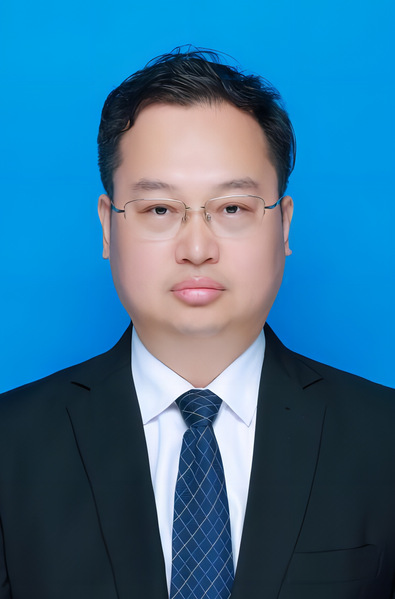
Prof. Jingxiao Zhang, Chang'an University, China
Biography:Jingxiao Zhang is a professor at the School of Economics and Management of Chang'an University, a doctoral supervisor, and a responsible undergraduate professor. Visiting scholar at ISU University in the United States, visiting scholar at QUT Higher Education in Australia, and visiting scholar at London South Bank University. Research direction: Construction Economy and Service Management; Environmental impact assessment of transportation infrastructure; Research on digital construction management mode; Engineering management BIM education, etc. Led and participated in over 50 projects, including 2 National Social Science Foundation projects, 1 National Natural Science Foundation project, 1 National Natural Science Foundation major project sub project, 2 national level new engineering research and practice projects, 1 International Joint Fund project, and 19 provincial and ministerial level projects; Published over 160 papers, including 2 highly cited papers. Published over 50 SCI/SSCI double indexed papers in journals such as JCLP, ASCE-JPI, and IJPR, and more than 20 CSI/EI indexed papers; Published 10 articles for review, including 5 articles published to the Central Office and State Office, as well as 5 articles published by departments such as the Provincial Decision Advisory Committee, the Provincial Political Consultative Conference, and the Transportation Think Tank Alliance of the Ministry of Transport; Chief editor of 5 works and 19 textbooks; Prepare 15 standards and 1 local regulation; Register 8 computer software copyrights; 30 patents; Two construction methods have been approved and seven new applications have been made.
Speech Title: Major project digital intelligence platform embedded in suspension : Theoretical evolution, analytical framework and future prospects
Abstract: With the deep integration of digital technology and major project management, the digital intelligence platform has become the core carrier to optimize the project organization structure and improve the management efficiency. However, the contradiction between organizational embeddedness and suspension in the process of landing has become a key problem restricting the quality and efficiency of the digital intelligence transformation of major projects. In this paper, the dual methods of bibliometric analysis and systematic literature review are used to systematically sort out 2347 valid literatures at home and abroad, and clarify the research status and evolution trend, core theme clustering and knowledge structure. It is found that the research in this field has gone through three stages, forming a hierarchical nested structure of five core subject areas : engineering project management foundation, technology embedding and organizational interaction, digital intelligence platform ecology, institutional environment and power structure, intelligent technology application and sustainable development. This paper systematically defines the concept of organizational suspension, analyzes the boundaries of its approximate concepts such as institutional decoupling, technological resistance, and insufficient absorptive capacity, constructs the ' embedded-suspension ' continuous spectrum framework, identifies five aspects of systemic deficiencies, and proposes four future research directions : constructing the theoretical framework of organizational suspension system, strengthening the theoretical adaptation of the characteristics of major engineering scenarios, promoting the diversification of methods, and deepening interdisciplinary integration, which provide theoretical basis and practical reference for follow-up research.

Prof.Hongbo Duan, University of Chinese Academy of Sciences (UCAS), China
Biography:Dr. Hongbo Duan is a Professor in the School of Economics & Management at the University of Chinese Academy of Sciences (UCAS) and a visiting Professor at the Maersk Mc-Kinney Moller Institute, University of Southern Denmark. Over the past decade, he has established himself as a leading expert in energy-economy-environment (3Е) integrated modeling, climate policy and energy transition analysis, and data-driven analytics for decarbonization. He is the developer of 3E digitalized platform-Ambition 3E (www.hongyuan3e.com). Prof. Duan has authored more than 100 peer-reviewed journal articles, including those in Science, Nature, PNAS Nexus, and serves as co-Editor-in-Chief of Mitigation & Adaptation Strategies for Global Change, also on editorial and advisory boards for several international journals. Prof. Duan's research has been financially supported by the National Natural Science Foundation of China (NSFC), Ministry of Science and Technology, National Energy Administration (NEA), Environmental Defense Fund (EDF), and Chinese Academy of Sciences (CAS).
Speech Title: China’s energy and decarbonization transition under critical mineral constraints
Abstract: To be updated......
Copyright © The 14th International Symposium on Project Management (ISPM 2026)
